
Words by Ash Kissane
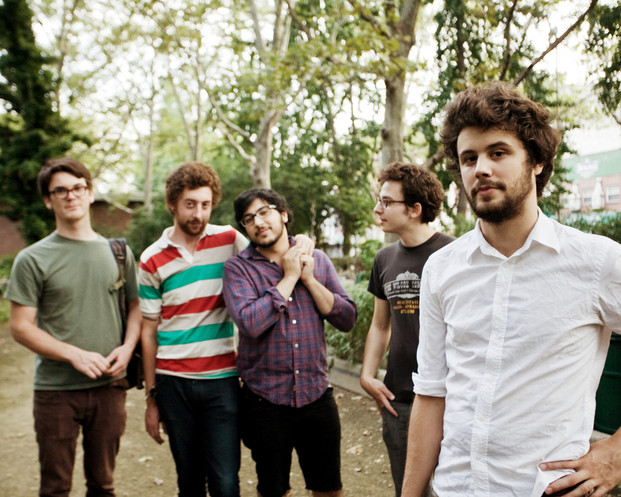
The brainchild of Michael Angelakos, Passion Pit was born from humble beginnings. The 4 track EP, Chunk of Change, was originally produced as a valentine present, but soon spread among Angelakos’ university as well as online, and soon he was taking stage with just a laptop and performing shows. An intense three years followed, in which the solo effort grew to a widely successful five-piece electro-pop machine, supporting bands like Death Cab For Cutie, Girl Talk, These New Puritans and more. The band’s first album, Manners, exploded worldwide, seeing the band thrust abruptly onto the world stage and a solid three years of touring sold out headline and festival shows followed its release.
This year, after three years in the making, Passion Pit’s much anticipated sophomore album, Gossamer has proven to be another major label success, however, these years have not been the easiest for the electro-pop group’s frontman. Passion Pit were forced to cancel a string of gigs this year due to illness after Angelakos revealed he has been battling with Bi-Polar disorder since the age of 17. For the most part, Passion Pit’s upbeat, electro-pop, synth heavy melodies belie darker, autobiographical, themes of heartache, suicide, drugs, alcoholism, anxiety and mental illness. The band are known for their incredible live performance, and their appearance at this year’s Parklife festival was nothing but.
I sat down with Angelakos backstage at Parklife festival, who apologised for being jet lagged and for the first half of the interview, barely maintained eye contact; it soon became clear the media circuit isn’t a place he feels at ease. The stage however, most certainly is, and the band proved to be a Parklife highlight.
MM: Firstly, can you tell me a bit about the meaning behind the album title ‘Gossamer?’ PP: It was simply a working title that I put in place half way through the making of the record. I suppose it developed certain applications as the content developed. The writing was over the course of a few years. I picked it arbitrarily; I like projects to have working titles. I suppose at the end of the day it helps you have certain meaning and I kept it. It’s the silk that spiders use to make webs.
MM: What meaning did you draw when you were using it as a working title? PP: There are a lot of different characters and a lot of different stories that are all connected in a certain way…I suppose the best way to put it is, all these different people that had nothing to do with each other were somehow brought together by a specific incident in my life and that connected them all together. I look at them as a series of vignettes…people that should never have intermingled in any way were forced to and I guess I weaved a very tangled web. It was a really strange period of my life. That’s a really bullshit way of explaining it, I’ve explained it eight thousand different times trying to find an application for it because there are so many different ways of talking about it. For instance, you can look at it like a spider web from a number of different angles in one room and depending where the light is, you can see its different configurations so everyone’s perspective is different depending where they’re standing. There are a myriad of ways…I don’t know, it’s mostly just bullshit.
MM: How did Passion Pit come together? When did you decide it was something you were going to pursue? PP: We didn’t really pursue it, it came about just by accident and I think that’s why I liked it. We were never in it to get signed or make a career out of it, we just wanted to have fun and play music. The only reason I put the music out there at all was because my friends liked it and they said I should. It was very innocently conceived. It’s since been made into a profession but that’s secondary to me. It has to be fun. We’ve tried to somehow reclaim what we’ve lost from touring of Manners where we felt we weren’t the same band that we were before we got signed, when we were just friends having fun. So now we look at our careers like, “How do we make this as fun as possible?” and that is initially what it was about. There was really never any drive to get signed or be famous or headline festivals, we never really cared about that. It’s wonderful and we’re really grateful to everyone but I think that’s why we can sleep at night because we’re not bloodsuckers and we’re not competitive, we’re just trying to have fun.
MM: The response to Manners was huge around the world, when you were going back into the studio did you have that in mind or was there any pressure? PP: I’m mindful of what people want, because you owe a great deal to the people that put you back in the studio. You’re back in the studio because something went well and people supported you so another record is in order. Bands that go into the studio and do these complete 180 degree turns are, I don’t want to say disrespectful, I just think there’s a certain amount of respect you do need to pay to your audience. Without forgetting what a typical creative artist really wants, which is to evolve and have fun and do things that are satisfying your creative needs. So it’s somehow striking a balance between the two. There’s no sophomore issue; each album is terrifying. I don’t know what the sophomore idea really is I just wanted to make something that I liked. But also I wanted to make sure I wasn’t turning off any fans because I felt like I owed something. I was so grateful to go into the studio for a living; it’s a wonderful thing.
MM: How do you go about writing? Do you have any kind of process? PP: There is almost no way to properly explain how it happens. One week I bang out four songs in a row, and the next it’s just fooling around with an effect or pedal. It’s totally up in the air; it’s not something you can turn off and on. I wrote over two hundred songs for the new album and I’m always writing but it doesn’t necessarily mean I’m writing for Passion Pit. Passion Pit has very specific parameters I have to work with that make it sound like Passion Pit. It was basically about finding the sound at the end of the day or sticking to the sound and seeing how far you can take it without going to far.
MM: What are the parameters for your sound do you have in mind when you’re choosing which songs to include? PP: You kind of know it when you hear it. It shouldn’t be anything but that. At the end of the day you should just know that sounds like a Passion Pit song, that’s how you know you’ve achieved something. Where you’ve stapled a certain sound, even when you’re playing something like “Constant Conversations” which is very different to the other Passion Pit material and it still sounds like a Passion Pit song. It just has that kind of sound to it, that is the most important part about making a record is making sure you have that distinct sound. You can do whatever the hell you want but it’s always going to end up sounding like Passion Pit. I don’t know how to explain how that happens or develops. If you surround yourself with the right people, like, I surrounded myself with people like Alex Aldi (engineer) who I work with on everything Passion Pit-related. He understands how I work and gets things done in the right way. We’re like brothers, we don’t even have to talk it just happens and it sounds like Passion Pit.
MM: Is there anyone that influenced you? PP: Mostly classic pop song writers from Giorgio Moroder to Randy Newman, from Tom Waits to Joni Mitchell, I like classic songwriters. From a production standpoint, Phil Spector to James Murphy. I listen to so much music, it’s really hard to pinpoint direct influences. The only reason I started making electronic music was because I had no other means of recording. I was forced to use samples and make synth patches on my computer because that was all I had.
MM: If there was anyone you could collaborate with, who would it be? PP: Andre 3000, I really like him.
MM: Is there anything coming up for the rest of the year that you’re looking forward to? PP: A lot, a lot, a lot of touring. Like, nothing but touring.
MM: Is there anywhere you’re looking forward to going that you haven’t been? PP: It’s a lot of the US, but it’s going to be nice to have more of a… I suppose the best way to put it is, I really need to have a routine. So, being in a bus and touring for three weeks straight is really good for me and shows end up being a lot easier and more fun. This is why I like this kind of festival style where it feels more along those lines, more routine based. Otherwise, you go crazy. I’m looking forward to working with the band and getting to the point where we feel super tight because we’ve been flying around. We did a full 360 world tour in eleven days and it wiped it us and it’s been nothing but promo. I’m definitely not complaining, it’s awesome that people care but it’s a lot right now. Basically it’s that until the new year. We have about six days off until the new year.
MM: That’s intense. Obviously, people love you here… PP: We love it here! It’s the only country we have a gold record in. So we we’re happy about that because we like playing here and everyone we work with here is great, the label is great. We’ve been looking forward to coming back since the last time we were here. The crowds are always awesome, the people are really nice. There are certain countries that can rub you the wrong way but I feel really comfortable here… I’m really jetlagged, I apologise. But everyone’s so nice, I love playing here.
Published at Moustache Magazine
 aislingkissane.com