
Words by Ash Kissane
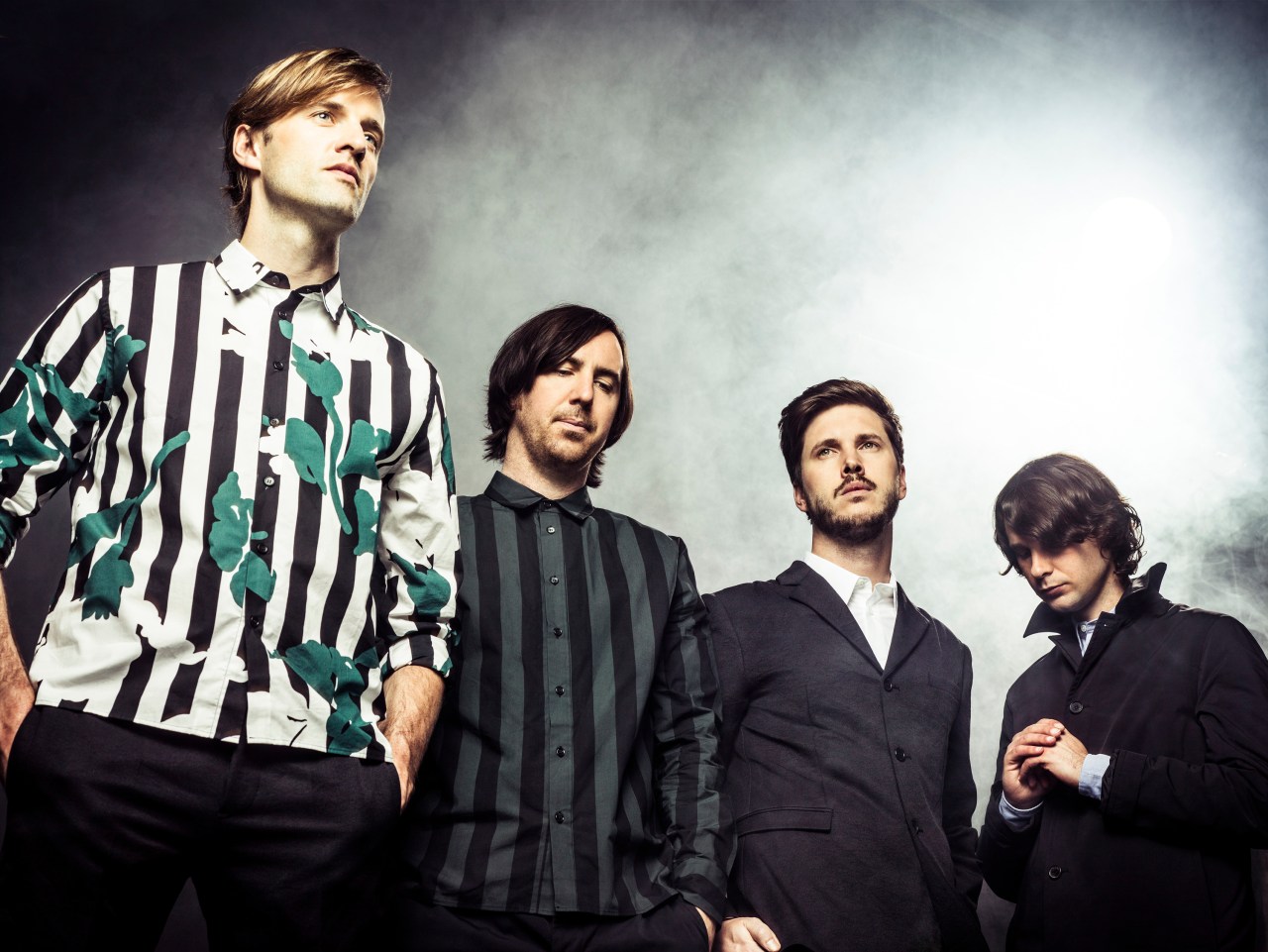
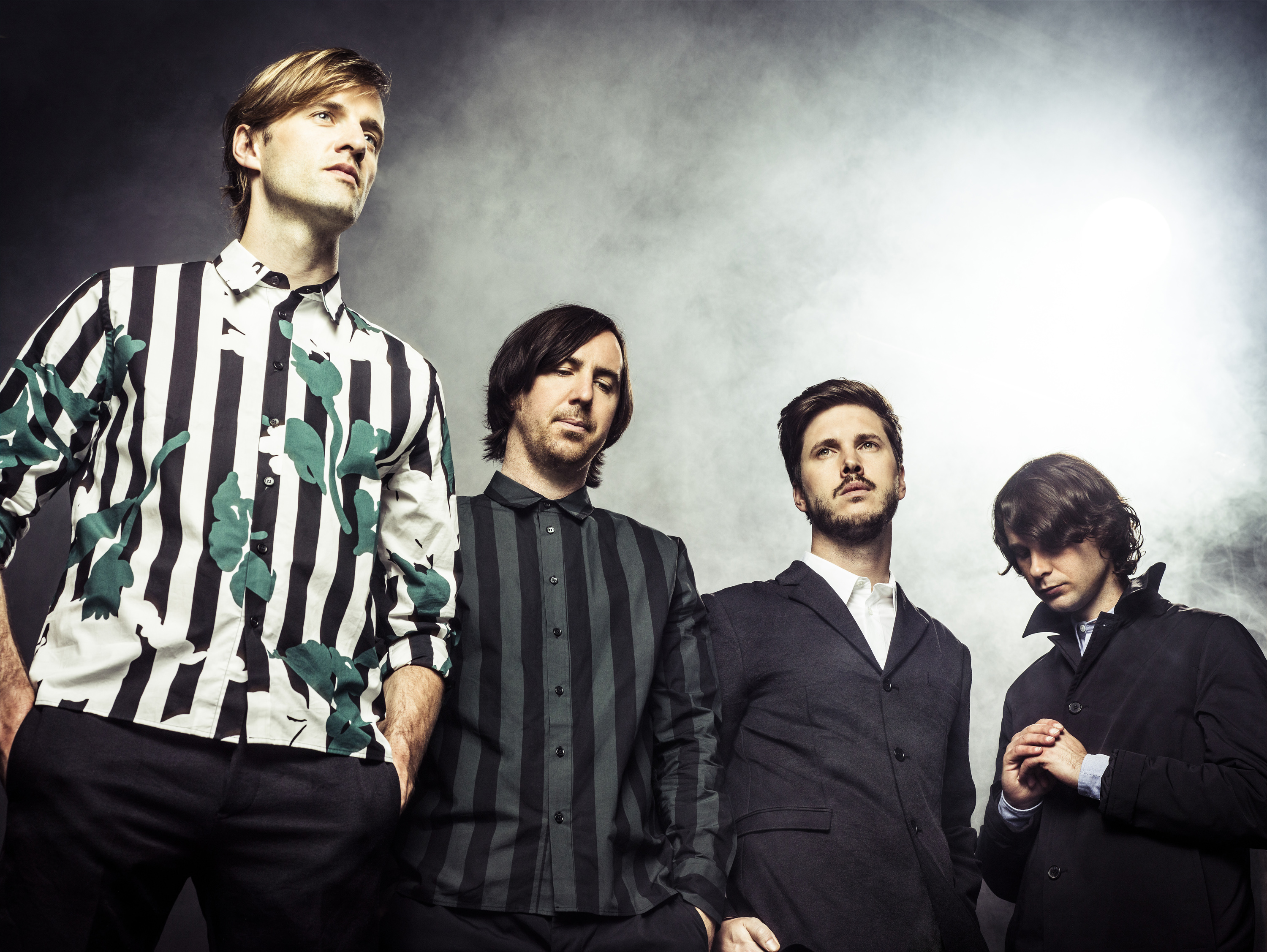
SINCE the release of their debut album, Bright Like Neon Love in 2004, Melbourne’s Cut Copy have been major players in Australia’s dance scene and defining its sound. This november, Cut Copy will return with their eagerly awaited fourth studio release, Free Your Mind. Exploring the idea of the next ‘youth revolution’, and employing 90s acid house and psyche-pop influences, the band begin their massive international album tour this week, with US audiences the first to hear the new material. I had a chat with Cut Copy’s Tim Hoey to find out more about their unconventional multi-media advertising campaign, and ideas of ‘euphoria,’ ‘freedom’ and ‘revolution’ that inspired them to make a record that is “overwhelmingly positive.”
MM: Where abouts are you at the moment?
CC: Right now, I’m sitting in the Universal offices in South Melbourne. We’re home for a few days, then we’re heading off overseas on Monday to begin the tour, so just enjoying these last few days at home.
It’s a huge international tour you guys are heading on, where are you looking forward to heading?
I guess this time, we’re all really excited to travel everywhere. This is the first time we’ll be playing a lot of the new material live. It’ll be interesting to get back in front of people again. I really love travelling, so I’m happy to be able to travel with our music. When you’re making a record, it’s such an internal process. Now it’s time to share it with the world.
For this record, you guys seemed to forgo the usual, straight up digital release in favour of a multi-media campaign. With the “Free Your Mind” billboards you guys erected, what was the significance of the six locations you guys chose?
There was a significance just in the fact that it was a global thing. We wanted to put them in different parts of the world, so it felt like it was everybody around the world could kind of participate in it, or as much as we could afford to put up around the world [laughs]. It was funny when we spoke to the billboard company, they were like, “We can put one on this highway that has 500,000 cars drive past it everyday,” and we were like, “No, we actually want the most remote location, that people never go to and that you never sell.” So, they were really confused by this, why we wanted to do it. We tried to explain the concept of what we were trying to do, so there were many weeks of back and forth, finding locations. Each billboard was going to be very unique to its environment. The person who saw the billboard and listened to the song in the ghetto in Detroit would have a much different experience to the person in outback Western Australia listening to it. I guess that was kind of the idea. Just the idea of a billboard is a very outdated model of advertising and we thought that was kind of interesting. Everybody advertises on the internet now, we thought it would be cool to do a very real world thing.
There is a heavy focus on that idea of freedom. Would you say this record is a concept album?
It’s certainly the theme of the record. We always have certain themes that seem to run throughout each record that we do and that’s been the one message that’s tied, conceptually, the songs together and some of the lyrical content. We kind of used the analogy of an A to Z record. You can listen to it start to finish and that was the way it was intended to be listened to.
There seems to be a focus on youth culture and revolution, and I read that you guys were inspired by the ‘two summers of love’, and the idea of the sound of the next youth revolution. What inspired that and what do you think that movement would sound like?
Yeah, it’s hard to say. At the time that these youth various movements in music and art were happening, they didn’t know that it was going to have the significance or impact that it did. It’s hard to know what the future’s going to bring or even what people are going to look back on, what they take from it. I guess we just noticed that there were certain themes running throughout the record that had a similar kind of idea of the early 90s acid house movement, or the late 60s psychedelic movement. This idea of community and bringing people together and this idea of euphoria; we thought that was a really interesting idea to be extending now, especially in this current world climate. We just had this idea of making something overwhelmingly positive.
You can definitely hear those influences, especially in “Let Me Show You Love”. What kind of stuff did you listen to growing up that may have had a part of that?
Yeah, a lot of the bands I listened to in the early 90s when I was in my most impressionistic stage, I guess. I was listening to a lot of bands that I still listen to today; bands like Sonic Youth and My Bloody Valentine. At the time, I didn’t really experience that kind of acid house or house music. I think my first real introduction into house or music was when The KLF came out. That’s certainly an act that have been a big influence on this record, particularly their Chill Out record, which is almost a concept album about taking a road trip around America. They had sound bites at radio stations at various points around America. We liked that idea and used a similar method, by going and interviewing people about their connection with spirituality, and that kind of formed the interludes to this record. I think that’s pretty much the only interaction that I had with that kind of theme though, was through those guys.
How did the process of making this record differ from past albums, it seems like it was very collaborative?
Yeah, Dan began this process for making the record that we’d try a new idea for a song every day and that at the end of that day, that would be it and we’d start a new one the next day. We did that over the course of two or three months then after that we went through everything and began to pick out songs or ideas that we thought were worth expanding on or ideas that kind of joined together to make a new song. The whole idea was to work quickly and not second guess anything. If you had an idea, you would just do it and then move on as opposed to in the past where we would sit down with a song and really work through it, talk about it and conceptualize it a bit more. This time it was just like if you have an idea, throw it down, if it sticks it sticks, if it doesn’t then we just scrap it. We’d never really worked that way before.
You guys premiered the single at Pitchfork Festival in Chicago. It would have been amazing for fans to receive the limited edition cuts, what did you guys gain from doing it that way?
It was a total experiment on our behalf, just in the fact that we didn’t really advertise it. All we really did was instagrammed and tweeted a photo of the guy at the festival with the record lathe machine and gave a location. Then it was up to the people there to actually ask him what it was. People came up and he told them, “We’re cutting the new Cut Copy album single live, you can get a copy and get it engraved and individually numbered.” Then it was up to those people to spread the story to other people and then the press caught onto it and it kind of grew. It was interesting to watch it grow without any real help from us, apart from posting a photo. I guess we just really liked this idea that for a really short amount of time, the song only existed on these 120 pieces of vinyl. We were always going to put it on the internet after that, but we just liked the idea that that was the only way people could listen to the song. Those 120 people had the experience that was totally unique to anyone else. It was kind of cool to see people react positively to that; it was a fun thing to try.
You guys have toured pretty extensively around the world, is there anywhere you would love to play, like a dream gig?
I’d love to play in central Australia, out in the desert there, so people would make a journey there to the middle of the desert. I think that would be really interesting to play a show there. I haven’t really experienced much of Australia, it’s all been around the coast. I’ve never been to Northern Queensland or central Australia or anything like that, so I feel like I need to explore this country a lot more.
So the album’s out at the start of November, which must be really exciting, what are you looking forward to most that’s coming up from this release?
Just that people are finally going to be able to listen to the record and that it’s their’s now. It’s been ours for the last year and a half and now it’s time for it to be everyone else’s. We’re just happy and excited for other people to be listening to it and for them to have it. I really like this time; it’s exciting. Finally, the time has come for people to interact with it. I’m just looking forward to seeing it on shelves or wherever people buy records from these days [laughs].
Free Your Mind is out in Australia on November 1.
Posted on Moustache Magazine.
 aislingkissane.com