
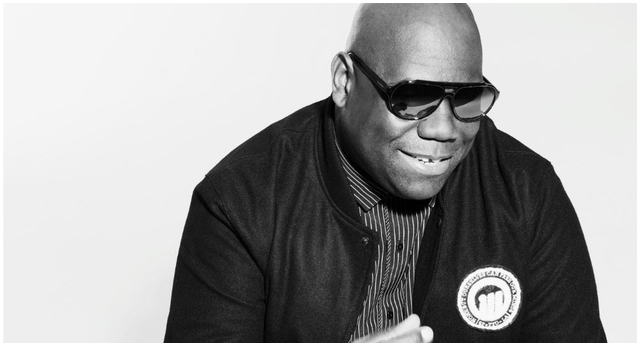
AS far as DJing goes, Carl Cox is basically the godfather. Rising to fame in the 80s, Cox is now considered the best DJ in the world. I had a chat to Carl about his new home in Australia, his influences and what it was like to play two New Years Eve parties, on opposite sides of the world, all during Y2K.
How long have you been in Australia?
I’ve got a house in Melbourne now so basically I’ve been here for two weeks so I’m in the right time frame now. I’ve already played a party in Sydney on a boat on the harbour then I did a gig at The Metro on the same night. It was a mad day and a completely mental night so that’s my first parties I’ve done here in Australia.
What sparked your decision to buy a house here in Australia?
Well the thing is I’ve been coming over every year now since ’88/’89 and I figured since I’ve been here every year I thought I might as well just buy a house. I’ve always stayed at hotels and friends’ houses and I love it here. I thought if I buy a house here I might either love it or hate it and I actually love it! I’ve got a place to stay and it’s right on the peninsular, surrounded by water everywhere and mountains and wineries around. It’s everything for me to have the life that I think I should have. To relax and enjoy the peninsular lifestyle, they call it.
You’re pretty well known for your New Years shows at the turn of the millennium where you played in Sydney and then headed to play again in Hawaii. What was the atmosphere like in the midst of the whole Y2K drama?
People were partying because they thought it was going to be the end of the world, that was it. They were going to get their last kiss, last shag, last hurrah sort of thing and everyone went completely mental. There were 15,000 on the beach and I can remember it very, very well. The countdown until 12 O’Clock and everyone thought, “right this is it”. Everyone thought the computers were going to shut down, planes were going to fall out of the sky and nothing happened except a new year! So everyone kind of just got into it and for 3 hours every single record I played, a lot of old stuff and a lot of new stuff, the idea was to create the best party possible. We also had a satellite link with BBC Radio 1 worldwide and it was the first time people were doing internet streaming so they were testing that out to different countries. So can you imagine, everyone was listening to every single thing I was doing and it was all vinyl! Being outdoors, it was windy at the time, I was completely stressing making sure that nothing was jumping and all of that sort of stuff. We actually built a little shelter for the turntables because without it, you’d put on a record and the record would fly off. So we were like, “Well, that’s not going to work.” This is about 10 minutes before the doors opened. It was really stressful, it was chaos. Then I jumped on an old 737 Qantas plane that they used because most modern planes are run by computer.
They actually went that far…?
Yep, they put me on an old plane so that if the computers went they could grab a hold of it themselves. So there were 300 of us going over from Sydney to do it all over again in Hawaii. Again, it was equally as mad. It was also 12 hours later from when I’d started in Sydney, I basically did the end of the millennium and the beginning of the millennium based on this 12 hour cycle; I went back in time. When I left Sydney at 6am and arrived in Hawaii at 7pm in 1999.
Which was your favourite show of the two?
I’d have to say Sydney because I think I have more of an affinity with Sydney. Hawaii was the first show that I’d ever done there and I think people were kind of shell shocked by the music, the energy, the whole vibe of the place. I do love Australia and I think that was the perfect place for me to be at that time.
Because you tour so extensively, and have multiple houses around the world, do you feel tied to any one location that you love to play?
To be honest, because I play all over the world I don’t even feel at home when I play in England. I live there like a stop gap. When I head to Australia and I’m in Melbourne, I’m like, “This is what I’m talking about!” I’ve got my swimming pool, I’ve got my tennis court, I’ve got my cars and my motorbikes and everything. I work this hard to get that, so I can sit there and think, “Okay, this is why I’m working this hard.” I feel very much at home there for sure.
What was the first thing you heard that triggered your interest in music?
It really stems from my father because he was buying music and bringing it home and playing it at parties at the house. I was exposed to a lot of old funk and soul music, and country and wester. All sorts of music of the late sixties into the early seventies. My father would be the DJ playing this music his family and friends downstairs and I’d be upstairs at 8 or 9 meant to be asleep and all I could hear was this music. So one night I came down the stairs looking through the banisters to see what they were doing. My father saw me and said, “There’s one of two things you can do. You can either come downstairs and put these records on or go back upstairs to bed.” So I was like, “I ain’t going to bed. I’m gonna go play some records!” I didn’t know what they were but they just looked great and you could put something on and people would dance. So that’s how I was exposed; from my father.
What kind of stuff did you discover for yourself growing up?
A lot of what was around was Motown, Jackson Five, and at the time there was a lot of glam rock so you had Marc Bolan, Sweet, all these kind of old school bands… Bay City Rollers. That’s what I was exposed to but on the other side of it I was very much into black music like Isaac Hayes, James Brown, Wilson Picket and those kind of old school soul tracks. So my ears were always open to different types of music right from the beginning. The music that I loved that I really got into was funk and soul music, and jazz at the time was very predominant. In England they kind of cross collateralised the music to funk-jazz music. So the funky element of the guitar licks sound and jazz in between, the fusion, was something that I really really loved and really enjoyed to dance to. So I’d be going through the motions of all this music. I always enjoyed the 4/4 kick drums in music, so when it came to disco music, this is where I really found my corner, my niche, my sound.
Since starting out, what are some changes you’ve seen, positive or negative that you’ve noticed in the industry?
In the beginning there was no real industry. A popular DJ was a radio DJ because they had to reach out to millions of people. That DJ could be really funny or played really good tunes and was able to get that music across. That was the only way that of being accepted as someone that’s involved in the creativity of music. So apart from that, we never got any respect. We’d be wedding DJs, we just did it for beers and girls and play other peoples’ music. We had no place in the music industry. Everyone had another thing coming because as soon as this music hit: techno, house, electronic muisc, as soon as it hit, everyone just went crazy because you couldn’t hear it anywhere else than these parties. It was almost like an epidemic. I was at the complete forefront of this movement because I was in it before it was even a thing. Being involved in this music now – it has to be about 28 years doing this music and I was DJing for 10 years before that. It’s been a long time I’ve been developing my sound. I really enjoy the fact that it’s continued and evolved into something else. I see people of my generation, people like myself who are legends and I’m enjoying where I’m at right now and what the scene is like, I think it’s really positive.
 aislingkissane.com